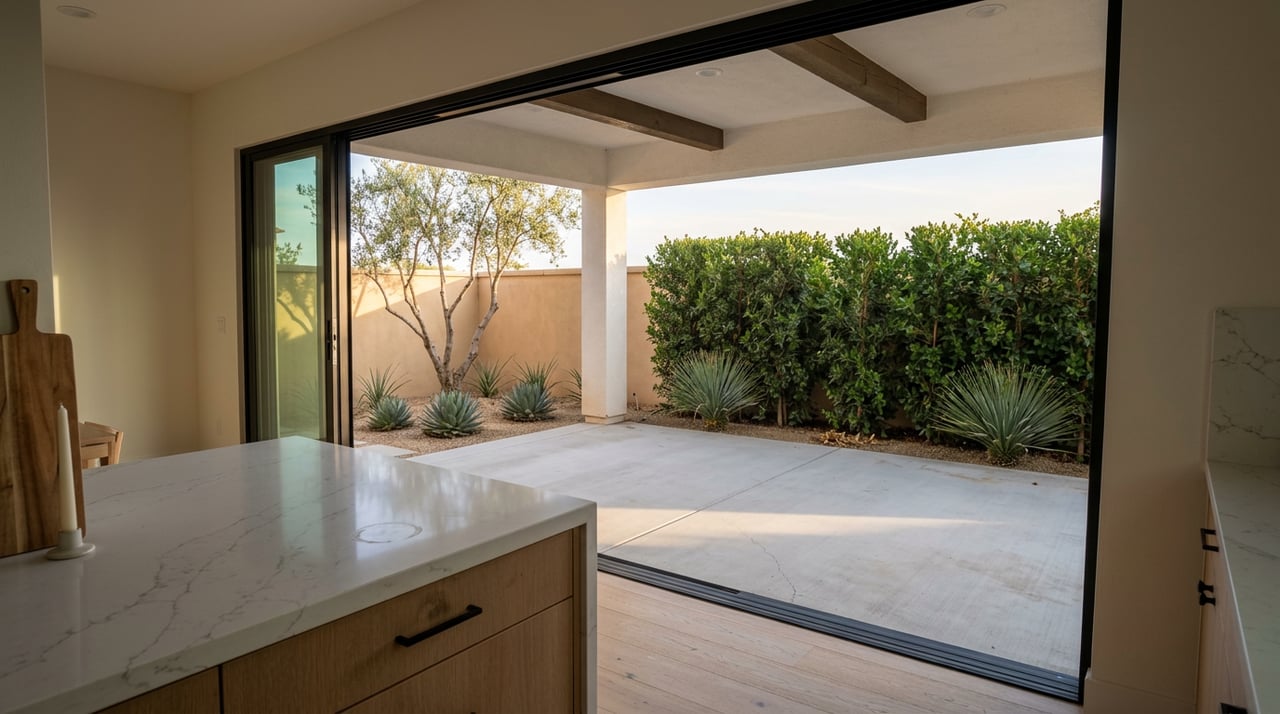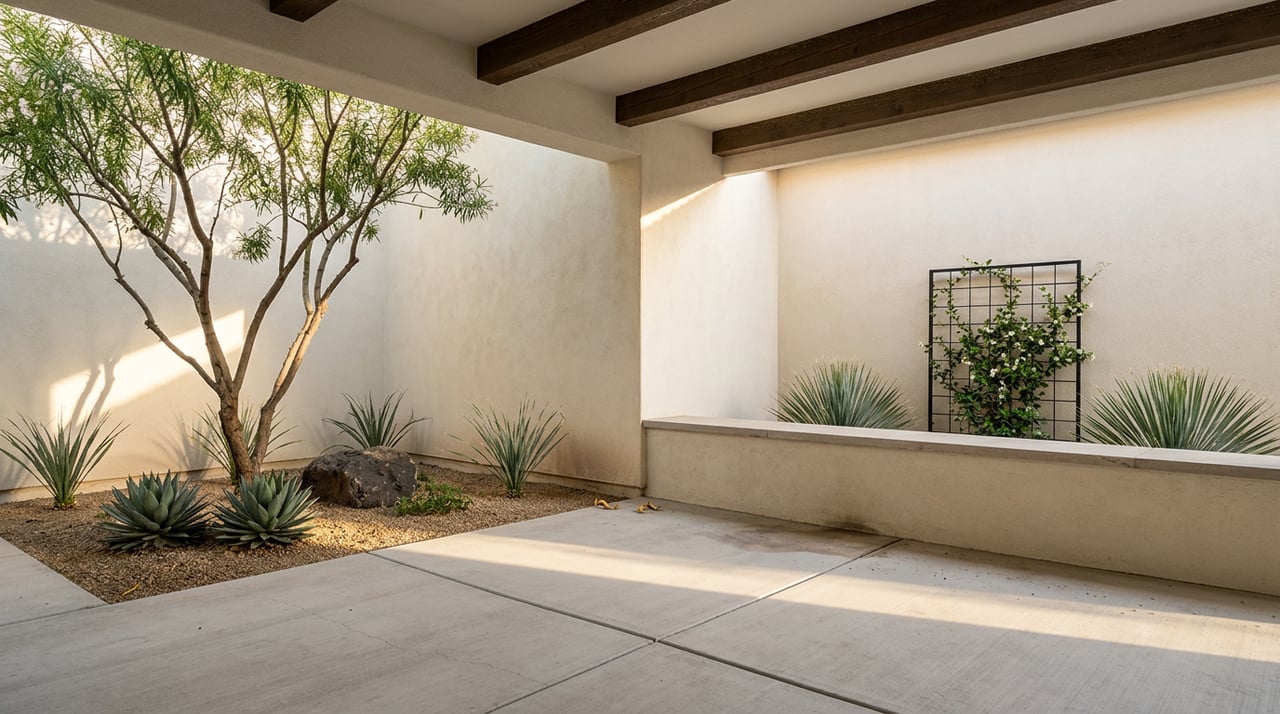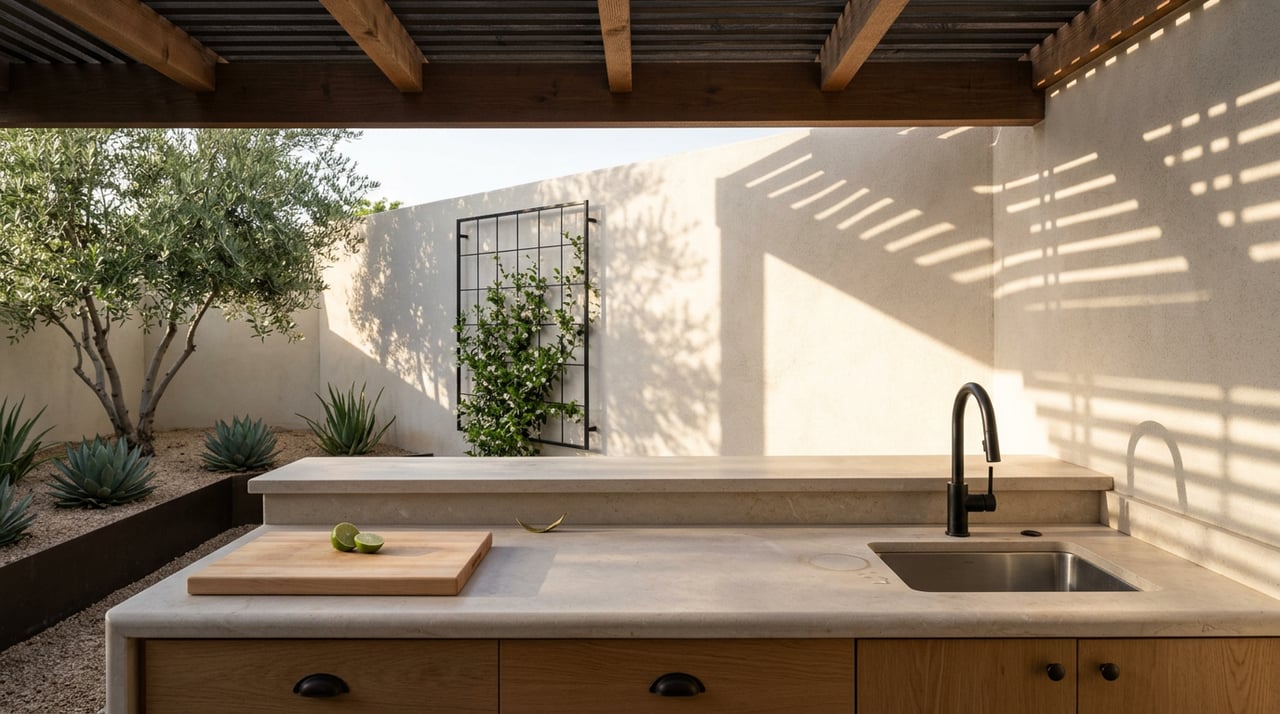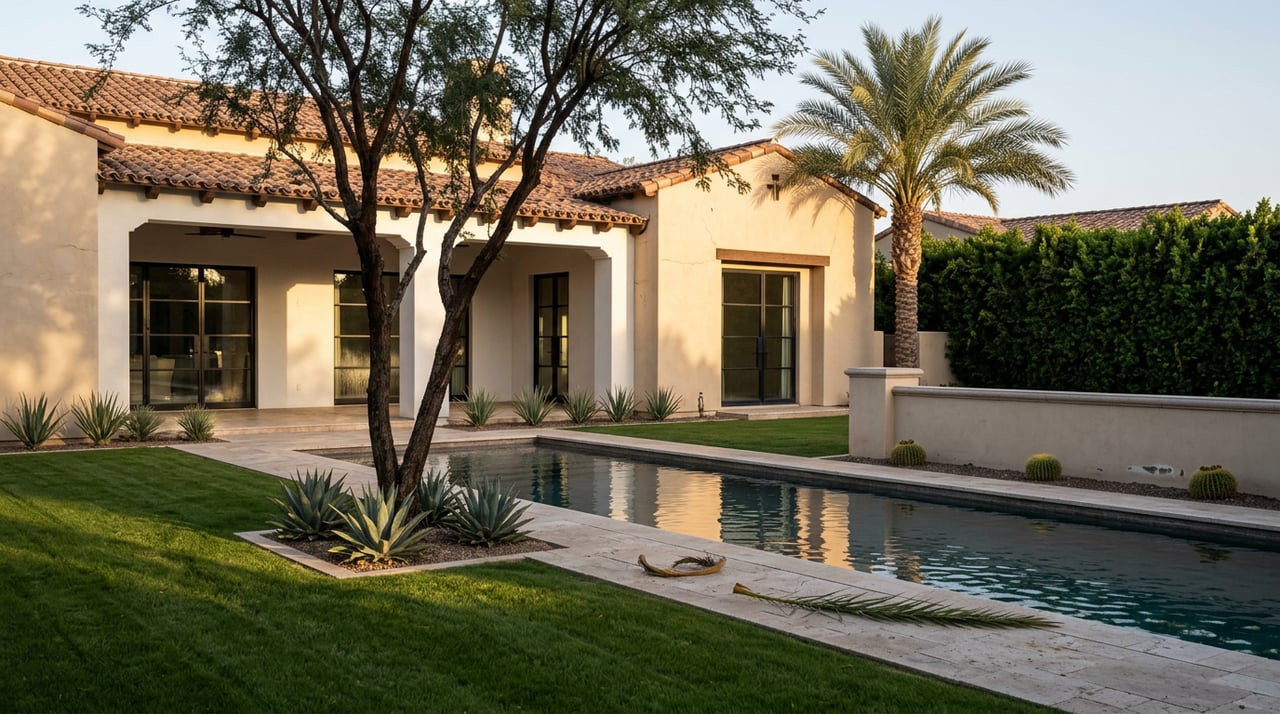
A 20,919-square-foot estate at 5531 East Mockingbird Lane closed on July 9, 2026, for $40.24 million, an all-cash deal that broke the record for the most expensive home sale in Arizona history. The property came with an underground go-kart track and a private shooting range, and the sale shattered the previous state record of $33.5 million set in February 2025. Two miles away, in the same ZIP code, a 1988-vintage flat-lot home was likely sitting on the market for its 90th or 100th day, priced in the low seven figures, waiting for a financed buyer who was watching mortgage rates more closely than headlines about record sales.
Both of these houses are in 85253. Both show up in the same market report. And if you're comparing Paradise Valley to Scottsdale or Arcadia using the town's median price, you're comparing yourself to a number that describes neither one.
One ZIP Code, Two Markets
Paradise Valley has used a single ZIP code, 85253, since incorporating in 1961, and the town's one-acre minimum lot rule keeps roughly 5,800 households looking structurally similar from the outside. That uniformity is exactly what makes the split underneath easy to miss.
Here's the mechanism. Scottsdale and Phoenix each close somewhere between 800 and 1,000 single-family homes a month. Paradise Valley closes roughly 40 to 60. When your sample size is that small, a handful of trophy trades can drag the median wherever they want to. Ten homes sold for more than $10 million in Paradise Valley in the first eight weeks of 2026 alone. A single $30 million close on Casa Blanca Drive tells you nothing useful about a 5,000-square-foot home two miles north that was built in 1988 and needs a new roof.
Redfin's data for the three months ending April 2026 put the median sale price at $4.6 million, up 3.4% year over year, with homes selling in an average of 69 days. A separate local market report for June 2026 showed active inventory at 431 single-family homes with a median list price of $5.25 million, ranging from a teardown listed at $229,000 to estates priced above $40 million. Both numbers are accurate. Neither one tells you which market you're actually shopping.
The Number That Actually Works: Price Per Square Foot
If the median is the wrong tool, price per square foot, sorted by build year and corridor, is the right one.
At the top of the market, per-square-foot values pushed to $987 in May 2026, up from $951 in April, and luxury construction on premium hillside lots has been commanding $1,400 to $2,000 per square foot. Two closings anchor that range: a modern estate at 5641 North Casa Blanca Drive sold for $20.9 million in an all-cash deal in early 2026, working out to roughly $1,798 per square foot, and a custom home at 7050 North 39th Place traded for $12.25 million cash, setting a per-square-foot resale record for the town at $1,938.
Now look at the other end. Homes built in 2019 or earlier, listed above $3 million, between 3,000 and 8,000 square feet, closed at an average of $795.80 per square foot between April 8 and June 8, 2026. That's roughly a 2.4x spread between the softest and strongest ends of the same market, in the same quarter, inside the same one-ZIP-code town.
| Segment | Price per square foot | Window | Anchor example |
|---|---|---|---|
| Trophy / hillside, cash | $1,400–$2,000 | Jan–July 2026 | 5641 N Casa Blanca Dr, $1,798/sq ft |
| Older, financed | $795.80 | Apr 8–Jun 8, 2026 | Built 2019 or earlier, 3,000–8,000 sq ft |
The median can't see that gap. Price per square foot, read alongside build year and location, can.
Why the Corridor Matters More Than the Town
A comp from the Cheney corridor tells you almost nothing about a listing on Casa Blanca, and vice versa. Three pockets illustrate the point.
- Casa Blanca corridor. Trophy tier, mostly cash, spec builders active, much of it off-market before it ever hits the MLS. Twelve homes on Casa Blanca Drive have sold for more than $8 million in the past three years.
- Camelback Country Club Estates. Anchored on the Tatum Boulevard corridor around the historic Paradise Valley Country Club, founded in 1953, with one-acre lots, mature landscaping, and inventory that ranges from original 1960s ranch homes to significant new custom builds.
- Cheney corridor. Central and flat-lot, walkable, dominated by 1950s and 1960s originals that increasingly sell as teardowns for new construction.
J. Andrew Turley, president of Phoenix Appraisals, described Casa Blanca in reporting on the $20.9 million sale this way:
"The Casa Blanca corridor is widely considered one of Paradise Valley's most coveted residential enclaves."
That reputation is exactly why developers watch that street before a listing goes live, and it's why comps drawn from Casa Blanca will overstate value almost everywhere else in town.
Why the Middle Cooled While the Top Kept Climbing
Inventory jumped 42% month over month to 431 active listings by June 2026, pushing months of supply to 10.3, the strongest buyer position 85253 has seen in eighteen months. Days on market climbed from 97 in April to 121 in May. List-side medians actually pulled back, from $5.55 million in April to $5.25 million in June, even as per-square-foot pricing kept rising.
The explanation is rate sensitivity, or the lack of it. Freddie Mac's weekly survey showed the 30-year average near 6.0% in early March 2026. Cash buyers, who dominate the trophy tier, barely notice that number. Financed buyers in the $2 million to $5 million range feel it directly, and that's the segment where inventory built up and timelines stretched. If your target property sits in that band, you're shopping into a genuine buyer's window. Write strategic offers. Don't chase list price out of habit shaped by the town's reputation.
The Teardown Math That Bridges the Gap
Buyers priced out of turnkey trophy inventory often look at teardowns instead, and in Paradise Valley the math can pencil. Land-only opportunities exist at the $2 million to $3 million price point, and pairing that with a $5 million to $7 million custom build still produces a finished asset in the $8 million to $12 million range, comfortably below the $15 million-plus trophy tier. Buyers in this segment typically work with builders like Drewett Works, Tabarka Home, Candelaria Design, Thomas James Homes, or Shea Custom.
A February 2026 sale illustrates the land-value logic directly. A 4.75-acre lot sold for $14.3 million in cash, and the nine-bedroom home built on it in 1952 was expected to be razed to make room for new construction. The price reflected location, size, and development potential, not the structure standing on it that day.
One detail catches teardown buyers off guard: demolishing the existing house can sometimes reduce what the lot is allowed to support. On certain R-175 parcels, setback standards shift depending on whether a primary building existed before June 13, 1991. A lot with a qualifying older structure can carry a 40-foot front setback, while the same lot without that structure may face a 100-foot front setback instead. That's the kind of detail worth confirming before a demolition permit gets pulled, not after.
What This Means If You're Comparing 85253 to Arcadia or Scottsdale
Scottsdale's luxury segment has been averaging roughly 80 days on market in 2026. Paradise Valley, the most exclusive of the three, has been running longer, around 90-plus days, reflecting its smaller and more selective buyer pool. Arcadia resists a clean number entirely, because its mixed inventory of original ranches and new multimillion-dollar builds makes any average unreliable for a specific home.
The practical takeaway is the same across all three markets. Read six to twelve month windows for your specific price band, and price against comps in your micro-pocket rather than a town-wide average. A market average is close to useless for a single transaction. What moves your timeline is how precisely your home, or your target home, is priced and positioned within its own band.
FAQ
Is Paradise Valley currently a buyer's market or a seller's market? Both, depending on where you're shopping. The $2 million to $5 million tier has moved toward buyer-favorable territory as of mid-2026, with inventory up and days on market extended. The trophy tier above $10 million is still setting records and behaving like a seller's market with very few comparable properties to choose from.
Why did days on market rise to 121 in Paradise Valley in May 2026 while record sales kept happening? The two figures describe different buyer pools. Financed buyers in the middle tier are more exposed to mortgage rates and took longer to commit. Cash buyers at the top were largely unaffected and kept closing at record prices.
Does tearing down a home in Paradise Valley automatically increase its value? Not automatically. The finished-asset math can work when land, corridor, and build costs align, but zoning quirks like the R-175 setback rule tied to a home's construction date can change what's buildable once the original structure is gone. That's worth confirming with a site-specific review before committing to a teardown.
If you're trying to figure out which of these two markets your target property actually belongs to, that's a conversation worth having before you write an offer, not after. Gina Wilkerson's appraisal background means she reads a listing in price-per-square-foot terms first, corridor by corridor, rather than starting from a town-wide median that was never built to answer your specific question. Get Your Instant Home Valuation to see where your search, or your sale, actually sits.