A software engineer with an offer letter from Microchip Technology's Chandler headquarters does what everyone does before a relocation: pulls up the median home price for the city. Right now that number sits somewhere between $520,000 and $565,000, depending on which aggregator you check and whether you're looking at a three-month rolling average or a single month's snapshot. So she budgets around $550,000, assumes that gets her a reasonable house near her new job, and starts looking at listings in Ocotillo, the master-planned community that sits closest to the Price Road tech corridor.
Then she finds two things that don't square with the number she budgeted around. A lakefront home in Ocotillo Lakes is asking $900,000 and has been sitting for two months. Meanwhile a listing in Downtown Chandler, ten minutes away, shows a neighborhood median that jumped more than 20 percent in a year. Which one is the real Chandler market? Neither, exactly. And understanding why is the difference between overpaying in one pocket of the city and walking away from a fair deal in another.
One number, three markets
Chandler's citywide median blends a historic downtown core, a handful of tech-anchored master-planned communities, and a shrinking band of entry-level detached homes into a single figure. That figure is accurate as a citywide average. It is close to useless as a guide to what you'll pay in any specific neighborhood, because the three sub-markets it's averaging are moving for entirely different reasons.
The reason Chandler has this kind of split at all traces back to one physical stretch of road. The Price Corridor, running along Loop 101 and Loop 202, employs more than 40,000 workers at companies including Intel, Wells Fargo, Bank of America, Northrop Grumman, Microchip Technology, and Dignity Health. Microchip's global headquarters alone carries roughly 1,700 employees. NXP Semiconductors runs a Chandler manufacturing and R&D campus of similar size, and completed a $100 million expansion in early 2026 focused on 5G transistors and RF power amplifiers. Intel's Ocotillo campus, where the company has operated since 1980, remains the city's largest single employer.
That corridor is why Ocotillo commands a premium. It's also, counterintuitively, why Ocotillo is currently the softer market of the two.
The corridor's own market is cooling
Here's the part that surprises people who assume more tech jobs automatically means rising home prices next door. Ocotillo's trailing twelve-month median sale price, as tracked by one major aggregator through mid-2026, was $651,000, down 8 percent from the prior twelve-month period. Zillow's home value index for Ocotillo, updated through the end of June 2026, shows a similar pattern: average value around $671,000, down 1.5 percent year over year. A narrower neighborhood boundary that some aggregators use for "The Ocotillo" showed an even sharper apparent drop, down 19.1 percent, in data through June 2026.
That spread between an 8 percent decline and a 19 percent decline for what is supposedly the same neighborhood is itself a lesson. Smaller sample sizes and inconsistent boundary lines make micro-neighborhood statistics swing harder than the underlying market actually is. Ocotillo has close to 40 distinct sub-neighborhoods and enclaves, so how a data provider draws its lines changes the number it reports.
What isn't in dispute: Ocotillo's luxury and golf-frontage tier is softening. Days on market across the broader Chandler area ran roughly 50 to 53 days in early 2026, and Ocotillo's better-known luxury enclaves, like The Peninsula and Crown Point, sit at the upper end of that range or beyond. The mechanism here isn't a lack of demand from tech buyers. It's that Ocotillo's price ladder tops out high enough that even a well-paid engineer feels current mortgage rates on a $900,000 lakefront estate in a way they wouldn't on a $500,000 interior lot. Higher price points are simply more rate-sensitive, and Ocotillo has more of its inventory sitting in that sensitive range than almost anywhere else in Chandler.
| Sub-market | Recent median | Year-over-year | Typical days on market |
|---|---|---|---|
| Citywide (Chandler) | $520,000 (3 months ending May 2026) | down 2.9% | 49 days |
| Downtown Chandler | $393,000 (March 2026) | up 20.8% | 35 days |
| Ocotillo | $651,000 (trailing 12 months, mid-2026) | down 8% | 55-60 days |
Downtown's headline number is mostly noise
Downtown Chandler's 20.8 percent jump looks like the hottest micro-market in the city. It isn't, and the reason matters for how you read any neighborhood-level stat going forward. Only four homes sold in Downtown Chandler in March 2026, up from two the year before. A median built on four transactions moves wildly based on which four houses happened to close, not because buyer demand shifted overnight. Two additional sales, or two different houses in the mix, would have produced a completely different headline.
This isn't a knock on downtown. The Heritage District has genuine appeal, walkable streets, an established character that newer master-planned communities can't replicate. But a buyer who sees "up 20.8%" and assumes they need to move fast before prices climb further is reacting to a statistical artifact, not a trend. The better question for downtown isn't "what's the median doing," it's "what did comparable homes on comparable lots actually sell for in the last few closings," because there are so few closings that each one carries outsized weight.
The entry-level squeeze nobody budgets for
The third piece of the split gets less attention because it doesn't produce a dramatic headline. It's a quiet contraction. Across the East Valley, inventory for single-family homes under $450,000 has tightened significantly, not because those homes are disappearing, but because the same monthly payment that used to buy a detached three-bedroom house now aligns more closely with a townhome or condo.
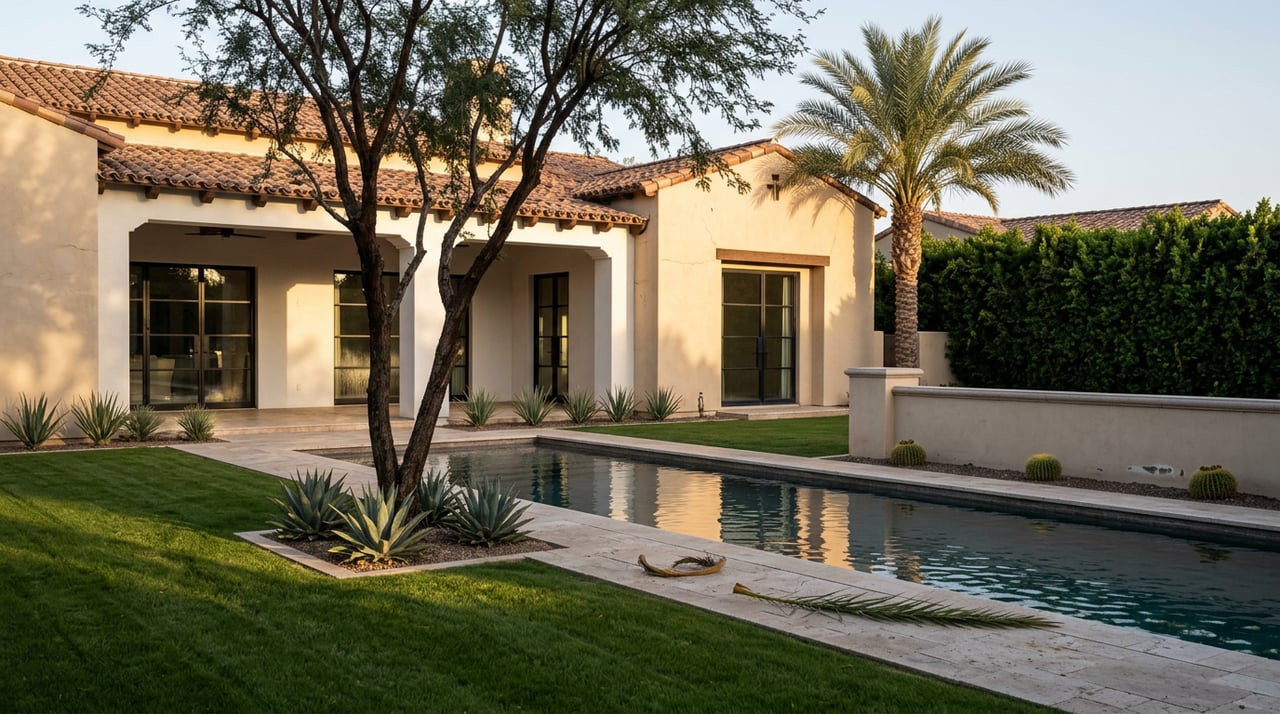
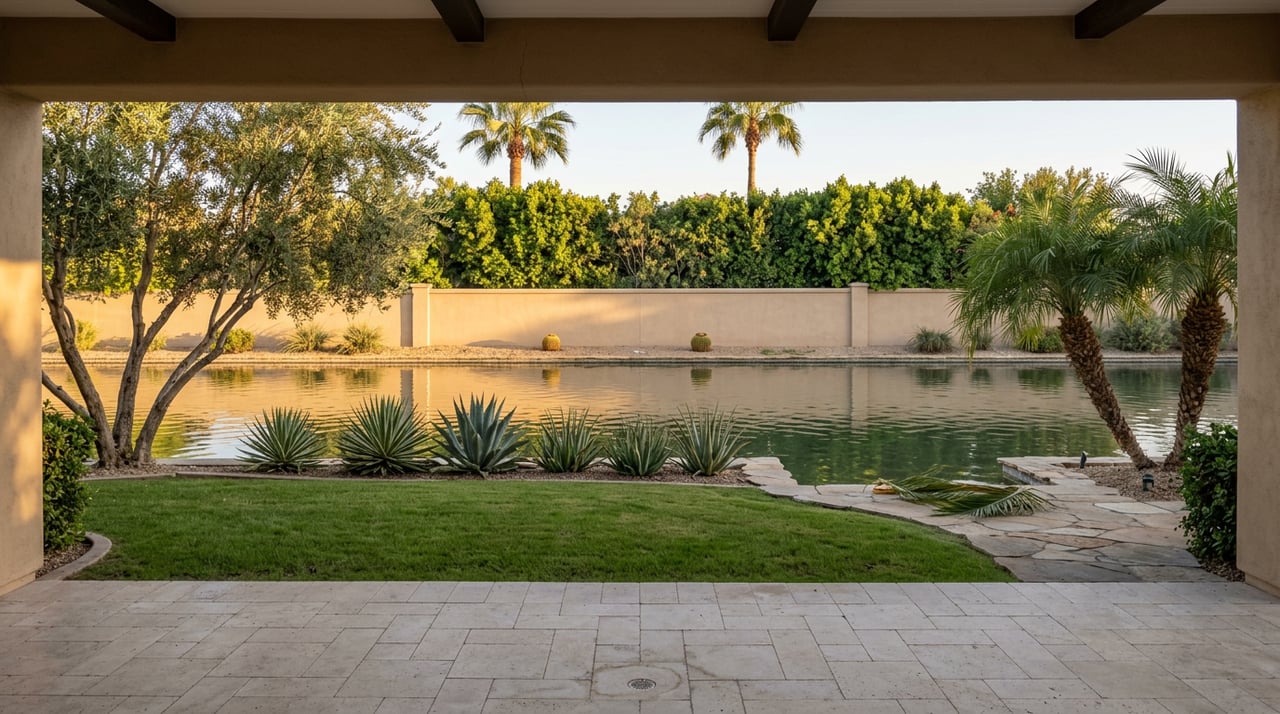
You can see this play out directly in Ocotillo's own entry points. Buyers can still get into the community through condos and townhomes in Corona Del Mar or Cantabria Shores starting around $399,000. Move up to an interior single-family home in Ocotillo Lakes or a similar enclave and you're typically looking at $550,000 to $800,000. Cross into lakefront or golf-frontage product in The Peninsula, Crown Point, or the Villas at Ocotillo and pricing runs $900,000 well past $2 million, with lakefront positioning adding a documented 20 to 30 percent premium over a comparable interior lot. Fulton Ranch, just south, offers a similar attached-housing entry point through gated communities like Serenity Shores.
The practical takeaway: if your budget assumed a detached starter home in the low $400s, you may need to widen your search to attached product, or shift your geography toward Chandler's northern corridors where that inventory still exists in meaningful volume.
What this means if you're comparing neighborhoods
The citywide median is a fine starting point for a Google search. It's a poor tool for deciding what to offer on a specific house. Three moves make the difference:
- Ask for the sales count behind any neighborhood-level stat you're quoted, especially in smaller pockets like Downtown Chandler where four sales can swing a median by twenty points.
- In Ocotillo and the Price Corridor communities, separate lakefront and golf-frontage comps from interior lot comps before you compare price per square foot. A $250 versus $400 per square foot range within the same master plan isn't noise, it's two different products.
- If you're anchored to a specific employer along the Price Corridor, price out both the interior single-family tier and the attached-housing tier before committing to a neighborhood, since the commute math and the budget math don't always point to the same enclave.
FAQ
Why did Downtown Chandler's median jump so much if the market isn't actually that hot? Only four homes sold there in March 2026, compared to two the year before. With that few transactions, the median reflects which specific houses happened to close, not a broad shift in buyer demand.
Is Ocotillo a bad time to buy right now? Softening prices in a job-anchored, amenity-rich community often mean more room to negotiate rather than a market in trouble. The corridor's employment base, led by Intel, Microchip Technology, and NXP, gives Ocotillo underlying demand that a thinner downtown market doesn't have.
Where's the best entry point if my budget is under $450,000? Attached housing, not detached. Condos and townhomes in Corona Del Mar, Cantabria Shores, and similar Fulton Ranch communities still open near $399,000, while detached inventory at that price point has tightened across the East Valley.
Should I trust the citywide median at all? Use it to gauge the overall direction of the market, not to price a specific offer. Chandler's three tiers, the historic core, the tech corridor's luxury enclaves, and the entry-level band, are moving for different reasons and deserve separate comps.
If you're weighing a move to Chandler and want comps pulled for the specific enclave you're considering, not the citywide blend, that's exactly the kind of pricing work Gina Wilkerson does before a client writes an offer. Get your instant home valuation or reach out to talk through which corridor actually fits your budget and your commute.