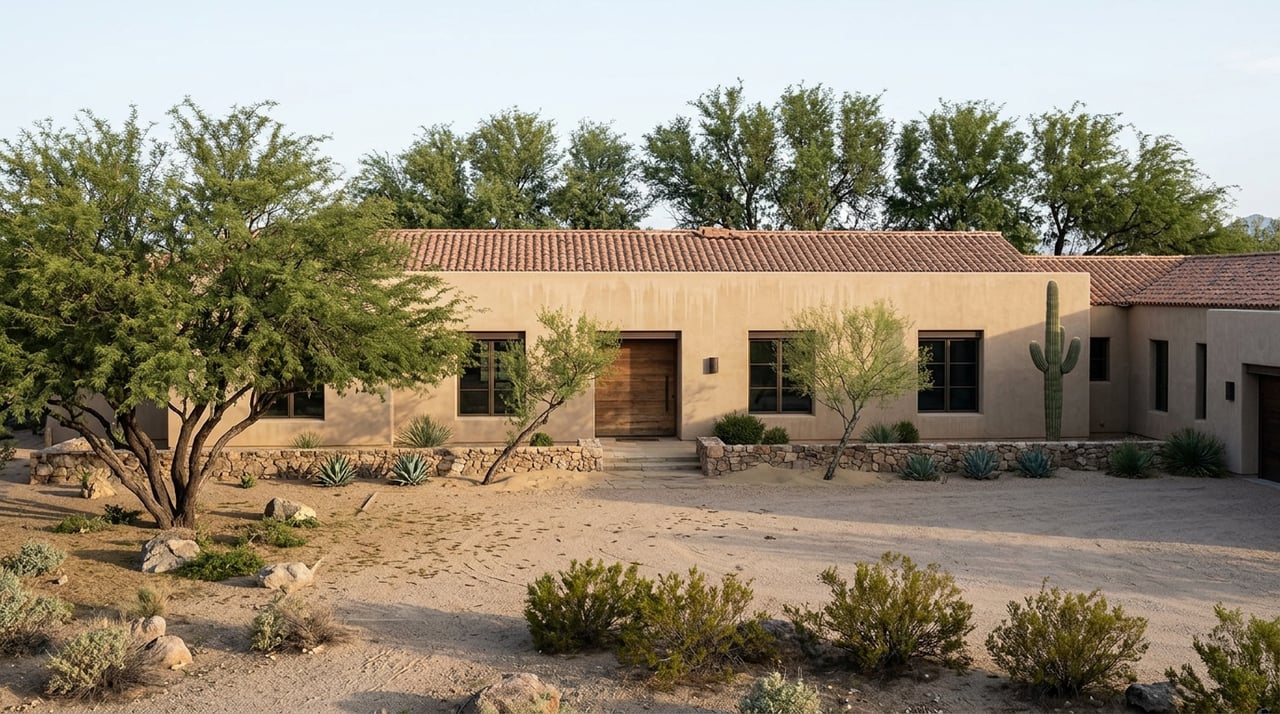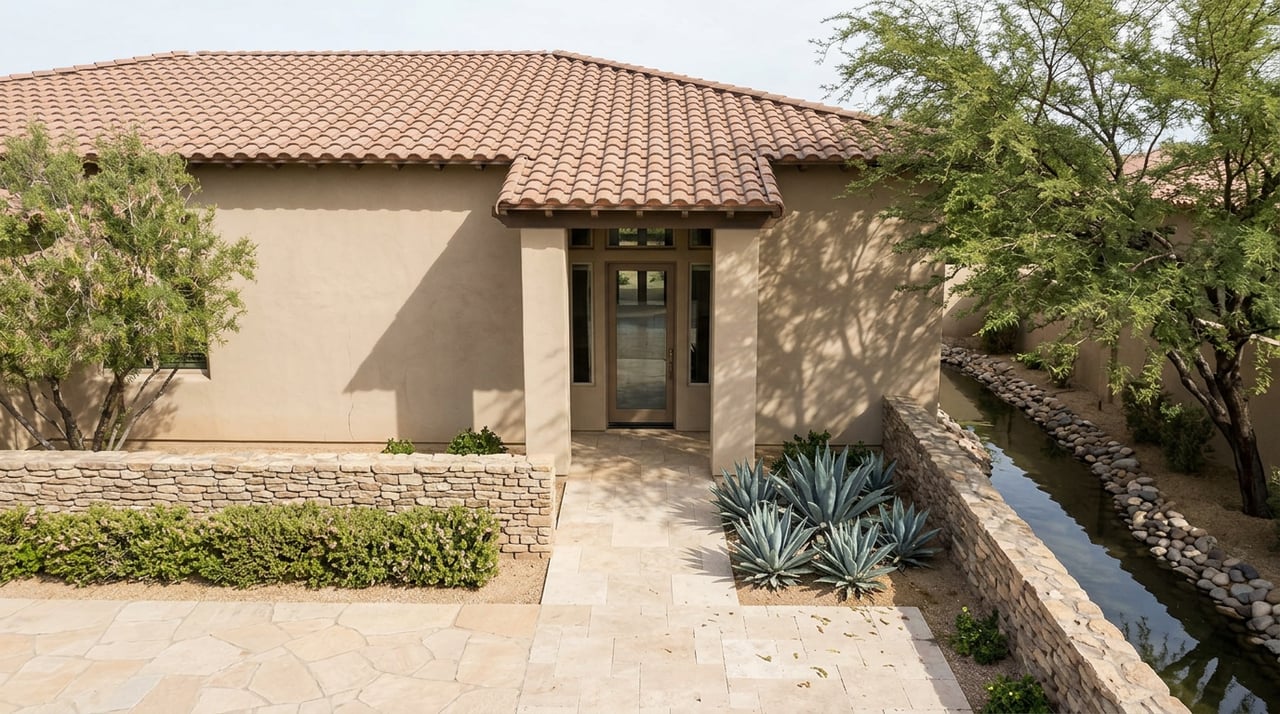
A buyer closes on a home in McCormick Ranch with a clear plan: run it as a weekend rental, cover the mortgage with nightly income, keep the rest as upside. The city license comes through without a hitch. The Arizona Transaction Privilege Tax account is set up. The first booking goes live.
Then a certified letter arrives from the HOA board. The community's covenants were amended eighteen months earlier to require minimum 30-day leases. The city never asked about it. The license never checked for it. And under Arizona law, the HOA does not have to yield to either one.
This is the mechanism most guides to Scottsdale short-term rentals skip past on their way to the licensing checklist: the city and the HOA are not the same authority, they are not enforcing the same document, and one of them can override the other without your ever seeing it coming until you already own the house.
Two Governments, One House
Arizona passed a preemption law in 2017, codified as ARS § 9-500.39, that stops cities and counties from banning short-term rentals outright or singling them out for restrictions that don't apply to other residential uses. Scottsdale cannot vote to prohibit Airbnb in a residential zone the way some cities in other states have done. That's the floor the state set, and it's the reason every STR guide opens with some version of "short-term rentals are legal in Scottsdale."
What that floor does not reach is a homeowners association. An HOA is a private contract between owners, built on covenants, conditions and restrictions recorded against the property. The state's preemption law binds government entities. It says nothing about what a private association can put in its own governing documents, and Arizona courts have generally treated CC&R restrictions on rental terms as enforceable through the HOA's own civil remedies, separate from anything the city does.
So the city's job and the HOA's job never actually touch. The city licenses the use. The HOA decides whether the use is allowed on that specific lot in the first place. A property can be fully compliant with one and prohibited by the other, and there's no single office you can call to get a combined answer.
What the City Actually Controls
Scottsdale's rules for short-term rentals run through Ordinance 4566, and they're specific enough that most of the friction here isn't about the city being vague. It's about the city and the HOA answering different questions.
Under the ordinance, an operator needs an annual short-term rental license at $250 per year, carries at least $500,000 in liability insurance, and must notify neighbors within 30 days of the license being issued. Occupancy is capped at six adults plus any dependent children. The ordinance also directly prohibits loud parties and unconstrained gatherings, a provision the city actively enforces rather than leaves on paper. Operating without a license draws a penalty of $1,000 per month, which is a meaningfully different cost structure than a one-time fine. It keeps accruing.
None of that is a secret, and none of it is where the surprise usually comes from. The surprise comes from what this list doesn't include: anything about whether your specific property is even eligible to be rented nightly in the first place. That question belongs entirely to the HOA.
| Question | Who answers it |
|---|---|
| Can I legally operate a short-term rental in Scottsdale at all | The state, via ARS § 9-500.39 |
| What license, insurance, and notification do I need | The city, via Ordinance 4566 |
| Is my specific property allowed to be rented under 30 days | My HOA's recorded CC&Rs, and only that document |
| What happens if my HOA says no after the city already said yes | The HOA's private enforcement remedies, not the city |
Where the Override Actually Shows Up
The properties most attractive for short-term rental income in Scottsdale are, almost by definition, the properties most likely to sit inside an HOA. Resort-style amenities, golf frontage, a walkable Old Town location. Those are the same features that draw nightly guests and the same features that draw board attention.
Communities like Gainey Ranch and McCormick Ranch, along with a number of the newer condo developments in Old Town Scottsdale, are among the places where this collision is showing up most. Boards in these communities are actively amending covenants to restrict or prohibit rentals under 30 days, often years after the original declaration was recorded and often without much public notice beyond an owner mailing. A property that was a legitimate STR candidate at purchase can become ineligible after a later amendment, through no action of the owner at all.
This isn't a flaw in the system so much as a structural mismatch. The city regulates behavior: noise, parking, occupancy, safety. An HOA board regulates use of the lot itself, and a board made up of owners who live there year-round has every incentive to treat nightly turnover as a shared-amenity and quality-of-life issue rather than a licensing question. The two rulebooks were never designed to agree with each other, because they're answering different questions for different audiences.
The Tax Stack Nobody Quotes as One Number
Underwriting an STR purchase means knowing what actually comes off the top of a nightly rate, and Scottsdale's tax structure resists being collapsed into a single figure for a reason worth understanding rather than skipping past.
The city layer runs 6.75 percent, split between a 1.75 percent hotel and motel privilege tax and a 5.0 percent transient lodging tax. On top of that sits Arizona's state transient lodging TPT at 5.5 percent, collected through the same TPT license used for the city application. Maricopa County then adds its own smaller transient tax on top of both. Stack all three and most Scottsdale hosts land somewhere in the low-to-mid teens as a percentage of the nightly rate.
The reason this doesn't get quoted as one clean number is that the county component varies enough, and shifts often enough, that a fixed combined figure goes stale quickly. For underwriting purposes, treat the tax drag as a range rather than a constant, and confirm the current county rate directly before finalizing a pro forma rather than relying on a number from a guide written months earlier.
Why the Rules Got This Specific
The occupancy caps, the one-hour local contact response requirement, and the party ban aren't arbitrary. As the Phoenix metro grew into a bachelor-party and spring-training destination, a subset of large Scottsdale homes started functioning less like vacation rentals and more like informal event venues, and the resulting noise, parking, and neighbor complaints turned short-term rentals into a genuine political issue in the city. Ordinance 4566 reads the way it does because it's a direct answer to that specific history: who is responsible for this property, how fast can they respond, and do the neighbors have a way to reach them.
That context matters for a buyer because it explains why enforcement here tends to be real rather than theoretical. Scottsdale isn't chasing paperwork violations for their own sake. It's responding to a pattern of complaints, which means the properties most likely to draw scrutiny are the ones that look, from the outside, like exactly the kind of large group-friendly home that caused the problem in the first place.
The Sequence That Actually Protects You
If short-term rental income is part of why you're buying a specific Scottsdale property, the due diligence sequence needs to start before you write the offer, not after your inspection period opens.
Request the full CC&Rs and every recorded amendment directly from the HOA management company, not just the summary packet a listing agent provides. Amendments restricting rental terms are often adopted years after the original declaration, and a dated, complete copy is the only way to know what's currently in force. Read specifically for minimum lease length language. A 30-day minimum written into the covenants functions as a complete ban on nightly rental, regardless of what the city allows. Confirm the city's license approval timeline against your actual closing date, since licensing isn't instant and a gap between close and license means a gap in rental income you may be counting on. Get the insurance minimum quoted before you count on the income in your underwriting, since $500,000 in liability coverage carries a real premium that needs to sit in your numbers from the start. Finally, ask the HOA directly, in writing, whether any rental restriction amendment is currently pending a vote. Boards that are actively discussing new restrictions will often say so if asked plainly, and that single question can save a buyer from closing on a property that's about to lose the exact use it was purchased for.
A Few Questions Worth Asking Early
Does Scottsdale's city license override my HOA's rules? No. The city license and the HOA's covenants operate independently. A valid city license has no bearing on what your specific HOA allows, and CC&R restrictions are enforced through the HOA's own remedies rather than anything the city controls.
If Arizona law protects short-term rentals, why can my HOA still ban them? The state's preemption law applies to government entities such as cities and counties. An HOA is a private contract among owners, and the same law that stops the city from banning STRs was never written to reach private covenants.
Do I need separate registrations for the city, the state, and the county? Yes. The city license, the Arizona TPT license, and Maricopa County's rental registration are three separate steps, and each one needs to be current independently before you accept a booking.
Whether short-term rental income is part of your plan or you're simply buying a home you intend to live in, the properties that make sense on paper and the properties that make sense on the ground aren't always the same list. That's the gap an appraisal-trained, insurance-literate read on a property is built to close before it becomes an expensive surprise. If you're evaluating a specific Scottsdale property and want a clear-eyed read on what its HOA, its insurance requirements, and its actual numbers say before you write an offer, Gina Wilkerson is a direct line to that kind of pricing and risk-aware counsel.